























Indonesia’s Economic Outlook and Investment Trends in 2024

Indonesia’s Economic Outlook and Investment Trends in 2024
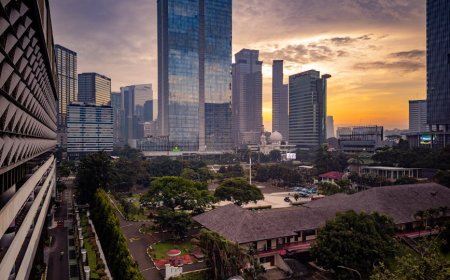
VOXBLICK.COM - Indonesia, Southeast Asia’s largest economy, continues to attract global attention in 2024 as it leverages its demographic dividend, abundant natural resources, and strategic location. As the world’s fourth-most-populous nation, Indonesia is poised for robust economic growth, fueled by a burgeoning middle class, policy reforms, and a vibrant startup ecosystem. This article examines Indonesia’s economic landscape, highlighting key investment opportunities, market trends, and the pivotal roles of its manufacturing and technology sectors.
According to the Asian Development Bank, Indonesia’s GDP is projected to grow by 5.1% in 2024, outpacing the regional average.
The government’s commitment to infrastructure development, digital transformation, and regulatory improvements is strengthening investor confidence. Furthermore, Indonesia’s participation in the Regional Comprehensive Economic Partnership (RCEP) is boosting trade and regional integration, positioning the nation as a hub for both manufacturing and innovation in ASEAN.

Investment Climate and Market Trends
Foreign direct investment (FDI) in Indonesia reached an all-time high in 2023, with the Indonesia Investment Coordinating Board (BKPM) reporting over USD 47 billion in realized FDI.
The momentum is expected to continue in 2024, underpinned by government incentives for priority sectors such as renewable energy, EV battery manufacturing, and digital services.
- Regulatory Reforms: The Omnibus Law, introduced in recent years, continues to simplify business licensing and labor regulations, creating a more attractive landscape for international investors.
- Sectoral Shifts: While traditional sectors like mining and palm oil remain significant, there is a notable shift towards high-value manufacturing, fintech, and green technologies.
- Resilience Amid Global Uncertainty: Despite global economic headwinds, Indonesia’s domestic consumption and prudent fiscal policy have provided a buffer, maintaining macroeconomic stability.
Startup Growth and Digital Economy
Indonesia’s digital economy is one of the fastest-growing in the world, forecasted to reach over USD 130 billion by 2025. The country’s dynamic startup ecosystem, centered in Jakarta and other major cities, is producing a new generation of unicorns
in sectors like e-commerce, fintech, and edtech. Major players such as GoTo, Bukalapak, and Xendit continue to expand, drawing significant venture capital investment from both regional and global funds.
The government’s “1000 Startups Movement” and increased access to digital infrastructure have empowered entrepreneurs and spurred innovation.
With over 200 million internet users, Indonesia presents a vast market for digital products and services, attracting investors seeking exposure to Southeast Asia’s digital transformation.
Manufacturing Sector: Driving Regional Impact
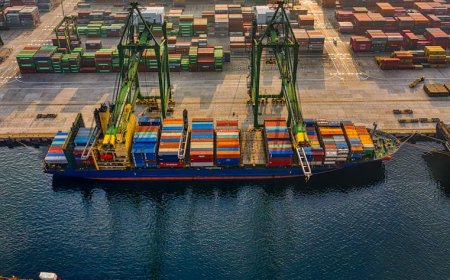
Indonesia’s manufacturing sector remains a cornerstone of the nation’s economy, contributing approximately 20% to GDP.
Recent trends highlight accelerated growth in automotive, electronics, and chemical industries, supported by the country’s integration into global supply chains. The government’s “Making Indonesia 4.0” roadmap aims to transform the sector through Industry 4.0 technologies, boosting productivity and export competitiveness.
Notably, the electric vehicle (EV) supply chain is emerging as a key investment area.
Indonesia holds the world’s largest nickel reserves, a critical component in EV batteries, and has attracted major investments from companies in China, South Korea, and Europe. This strategic advantage positions Indonesia as a future global leader in EV battery manufacturing and a pivotal player in the green energy revolution.
Opportunities and Challenges for Investors
Indonesia offers significant opportunities for investors seeking long-term growth in emerging markets. Key drivers include:
- Rising consumer demand from a young, urban population
- Strong government commitment to infrastructure and digitalization
- Increasing integration with regional and global trade networks
- Abundant natural resources and a growing focus on sustainability
However, challenges remain. Investors must navigate complex bureaucracy, regional disparities in infrastructure, and the need for continued regulatory clarity.
Political stability following the 2024 presidential election will also be a critical factor shaping future economic policy and investor sentiment.
Indonesia’s Role in the Regional Economy
As a founding member of ASEAN and a vital link in Asian supply chains, Indonesia’s economic trajectory has significant implications for the region.
The country’s transition toward high-value industries, digital innovation, and sustainable development not only strengthens its domestic economy but also enhances its influence in shaping Southeast Asia’s future.
In summary, Indonesia’s economic outlook in 2024 is marked by resilience, innovation, and expanding investment opportunities.
For global investors and business leaders, staying attuned to Indonesia’s evolving market trends and policy landscape will be key to capitalizing on the nation’s promising growth story.

What's Your Reaction?
 Like
0
Like
0
 Dislike
0
Dislike
0
 Love
0
Love
0
 Funny
0
Funny
0
 Angry
0
Angry
0
 Sad
0
Sad
0
 Wow
0
Wow
0