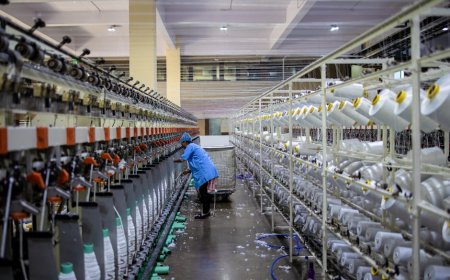

























Indonesia Accelerates Semiconductor Industry to Enhance Global Competitiveness
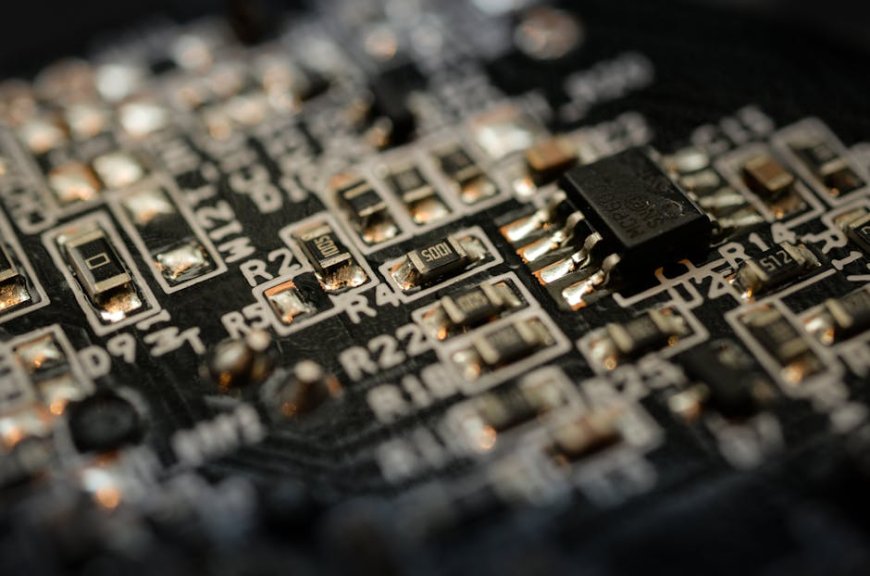
Indonesia Accelerates Semiconductor Industry to Enhance Global Competitiveness
VOXBLICK.COM - Indonesia, Southeast Asia’s largest economy, is making strategic moves to accelerate the growth of its semiconductor industry. Recognizing the sector’s crucial role in the global digital economy and supply chains, the Indonesian government has launched initiatives to attract foreign direct investment (FDI), foster local manufacturing capabilities, and strengthen its position as a high-tech hub in the region. These developments are poised to reshape the nation’s economic landscape and enhance its competitiveness in the global technology market.
The global semiconductor market, valued at over USD 600 billion in 2023, is marked by intense competition and rapid innovation.
Indonesia’s entry into this arena is timely, as supply chain disruptions and the ongoing US-China tech rivalry have prompted companies to diversify their manufacturing bases. By leveraging its abundant human capital, strategic geographic location, and supportive policy environment, Indonesia aims to become a critical node in the international semiconductor value chain.

Government Initiatives and Investment Climate
To accelerate its semiconductor industry, Indonesia has introduced policy reforms and incentives tailored to high-tech sectors.
The Ministry of Industry, for example, has designated electronicsincluding semiconductorsas a priority sector under the “Making Indonesia 4.0” roadmap. This strategy aims to position Indonesia among the world’s top 10 economies by 2030, with an emphasis on digitalization, advanced manufacturing, and sustainable practices.
Key government measures include:
- Tax incentives and import duty exemptions for semiconductor equipment and materials.
- Special Economic Zones (SEZs) with streamlined licensing and infrastructure support for high-tech industries.
- Collaboration with global technology leaders for knowledge transfer, workforce training, and joint research initiatives.
- Improved intellectual property protection to attract R&D investment.
These policies are complemented by Indonesia’s strong macroeconomic fundamentals, stable political environment, and growing domestic demand for electronics.
According to the Indonesian Investment Coordinating Board (BKPM), FDI in the electronics sector surged by over 30% in 2023, signaling increasing investor confidence.
Accelerating Local Capabilities and Regional Impact
Indonesia’s push into semiconductors has spurred joint ventures with global players from Taiwan, South Korea, and Japan.
Notably, partnerships with leading companies aim to establish wafer fabrication plants, assembly and testing facilities, and R&D centers in key locations such as Batam, West Java, and Central Java.
The development of local supply chains is also advancing. With vocational training programs and university-industry collaborations, Indonesia is cultivating a skilled workforce to support chip design, engineering, and advanced manufacturing.
These efforts are expected to create over 50,000 high-value jobs by 2030, according to projections by the Ministry of Industry.
The regional impact is significant.
Indonesia’s emergence as a semiconductor manufacturing base could reduce Southeast Asia’s reliance on imports, foster innovation clusters, and attract further investment into supporting industries such as electronics assembly, automation, and logistics. Neighboring countries are closely observing Indonesia’s progress, as it may set a benchmark for technology-driven economic transformation in ASEAN.
Challenges and Opportunities Ahead
Despite these positive trends, Indonesia faces challenges including infrastructure bottlenecks, the need for advanced technological know-how, and global competition from established semiconductor hubs.
Addressing these issues will require sustained investment in education, digital infrastructure, and regulatory reform.
However, Indonesia’s large domestic market, competitive labor costs, and improving ease of doing business present significant opportunities.
As global companies seek to diversify supply chains and tap new growth markets, Indonesia’s semiconductor sector is well-positioned to attract long-term investment and strategic partnerships.
For investors and technology firms, Indonesia’s semiconductor industry represents an emerging frontier with strong growth prospects.
The nation’s ongoing reforms and commitment to industrial upgrading signal a promising future for high-tech manufacturing and innovation in the region.

What's Your Reaction?
 Like
0
Like
0
 Dislike
0
Dislike
0
 Love
0
Love
0
 Funny
0
Funny
0
 Angry
0
Angry
0
 Sad
0
Sad
0
 Wow
0
Wow
0