
























Indonesia Holds Rates to Boost Investment and Economic Growth

Indonesia Holds Rates to Boost Investment and Economic Growth
VOXBLICK.COM - Indonesia, Southeast Asia’s largest economy, has maintained its benchmark interest rate in a strategic move to stimulate investment and bolster economic growth. Bank Indonesia (BI) announced recently that it would keep the seven-day reverse repo rate steady at 6.25%. The decision reflects a careful balance between supporting the nation’s growth ambitions and maintaining financial stability amid global economic uncertainty.
This policy stance comes as Indonesia seeks to attract both domestic and foreign investment, accelerate industrialization, and nurture its burgeoning startup ecosystem.
With inflation remaining within BI’s target range and the rupiah showing resilience, the central bank’s steady approach is designed to offer confidence to investors and businesses operating in the Indonesian market.

Implications for Investment and the Business Climate
The decision to hold rates is a critical signal to investors assessing opportunities in Indonesia’s dynamic market.
Lower borrowing costs and stable policy rates typically encourage capital inflows, support startup financing, and facilitate expansion in key sectors such as manufacturing, infrastructure, and technology. In 2023, Indonesia attracted over $45 billion in investment, an increase of 16.4% year-on-year, according to the Indonesian Investment Coordinating Board (BKPM).
Maintaining the policy rate also helps Indonesian startups and SMEs access affordable credit.
This is particularly important given Indonesia’s vibrant digital economy, which is projected to reach $130 billion by 2025, according to a joint study by Google, Temasek, and Bain & Company. Fintech, e-commerce, and logistics startups stand to benefit from increased funding and greater investor appetite, while established enterprises can leverage stable financing to upgrade technology and expand capacity.
Macroeconomic Stability and Regional Competitiveness
Bank Indonesia’s decision aligns with a broader macroeconomic strategy to foster stability.
Inflation has remained within the 2–4% target range, while the rupiah’s performance against the US dollar has been relatively robust compared to other emerging market currencies. This stability enhances Indonesia’s reputation as a safe and attractive destination for long-term investment in Southeast Asia.
- Manufacturing Growth: The manufacturing sector, a cornerstone of Indonesia’s economic transformation, is expected to benefit from sustained credit availability. The government’s “Making Indonesia 4.0” roadmap aims to position the country as a global manufacturing hub, targeting industries such as automotive, electronics, and chemicals.
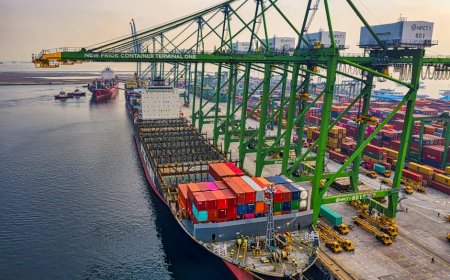
- Infrastructure Development: Continued monetary support is likely to accelerate infrastructure projects, from transportation networks to renewable energy, further improving logistics and reducing operational costs for businesses.
- Investor Confidence: Policy predictability and sound monetary management are key to strengthening investor confidence, especially as global investors seek alternatives to China and India.
Startups and Digital Innovation
Indonesia’s startup ecosystem has witnessed a surge in new ventures and investment deals, particularly in fintech, healthtech, and edtech. The central bank’s accommodative stance is expected to fuel further growth.
Venture capital investment in Indonesian startups reached $3.5 billion in 2023, as reported by Cento Ventures, with Jakarta emerging as a regional tech hub.
For entrepreneurs, the steady rate environment translates to lower capital costs and improved business planning.
It also supports the government’s ambition to foster 1,000 technopreneurs and create millions of new jobs through digital innovation by 2030.
Challenges and Outlook
While Indonesia’s policy direction is favorable for investment, challenges remain. Global economic headwinds, geopolitical tensions, and tightening monetary conditions in advanced economies could impact capital flows.
However, Indonesia’s prudent fiscal management, robust domestic demand, and ongoing reforms in ease of doing business are expected to mitigate these risks.
Looking ahead, Indonesia’s stable interest rate environment, combined with its youthful population, growing middle class, and progressive economic policies, positions the country as a compelling destination for investors and entrepreneurs seeking
opportunities in the Asia-Pacific region.

What's Your Reaction?
 Like
0
Like
0
 Dislike
0
Dislike
0
 Love
0
Love
0
 Funny
0
Funny
0
 Angry
0
Angry
0
 Sad
0
Sad
0
 Wow
0
Wow
0