























Indonesia and US Advance Landmark Reciprocal Trade Agreement

Indonesia and US Advance Landmark Reciprocal Trade Agreement
VOXBLICK.COM - The economic relationship between Indonesia and the United States is entering a pivotal new phase as both nations prepare to finalize a landmark reciprocal trade agreement by late January. This development comes amid growing interest from global investors in Southeast Asia’s largest economy, with Indonesia’s GDP expected to exceed $1.3 trillion in 2024, according to the World Bank. The agreement is poised to reshape bilateral trade dynamics, offering new opportunities for businesses and strengthening the investment climate in both countries.
Indonesian officials have emphasized that the trade accord will focus on reducing barriers, enhancing market access, and creating a more predictable regulatory framework.
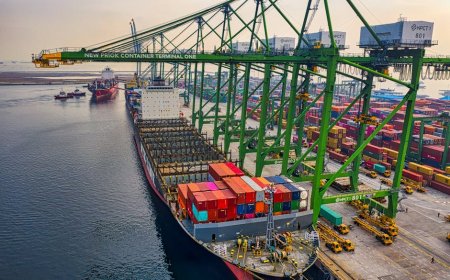
With a population of over 270 million and a rapidly expanding middle class, Indonesia represents a significant market for U.S. goods and services. Conversely, the United States remains one of Indonesia’s top trading partners, with bilateral trade surpassing $37 billion in 2023. The agreement is expected to further accelerate trade flows and foster innovation in sectors such as technology, manufacturing, and digital services.

Key Provisions and Strategic Sectors
The landmark agreement is expected to include provisions that benefit strategic sectors vital to Indonesia’s long-term economic vision.
Notably, the manufacturing industry, which accounts for over 20% of Indonesia’s GDP, stands to gain from streamlined export processes and improved access to advanced U.S. technology. The digital economyalready valued at over $77 billion in 2022, according to Google’s e-Conomy SEA reportwill also benefit from harmonized standards and joint innovation initiatives.
For U.S. companies, the agreement will unlock greater market access for agricultural products, consumer goods, and high-tech solutions.
Indonesia’s ongoing efforts to develop its electric vehicle (EV) supply chain and battery manufacturing industry could attract significant American investment, especially as global demand for green technologies surges. The reciprocal nature of the trade deal means Indonesian businesses will enjoy more predictable access to the U.S. market, supporting the country’s export diversification agenda.
Impact on Investment Climate and Regional Growth
This trade agreement is anticipated to reinforce Indonesia’s position as a regional investment hub. The country’s Investment Coordinating Board (BKPM) reported a record $47 billion in realized foreign direct investment (FDI) in 2023, with the U.S.
ranking among the top five investor countries. By reducing bureaucratic hurdles and offering stronger legal protections, the agreement is likely to stimulate further FDI in high-potential sectors such as renewable energy, fintech, and infrastructure.
Analysts predict that the deal will have a ripple effect across the ASEAN region, encouraging other Southeast Asian nations to pursue similar economic partnerships. For Indonesia, deeper trade ties with the U.S.
not only diversify its economic base but also align with its aspirations to become a global manufacturing and innovation center. Enhanced cooperation in intellectual property, labor standards, and environmental protection will further bolster investor confidence.
Opportunities for Startups and SMEs
Indonesia’s vibrant startup ecosystem, home to more than 2,400 tech startups and several “unicorns,” stands to benefit significantly from the agreement. By easing cross-border data flows and improving access to U.S.
venture capital, the trade pact could accelerate the growth of Indonesia’s digital economy. Small and medium-sized enterprises (SMEs), which employ over 97% of Indonesia’s workforce, are expected to gain from simplified export procedures and capacity-building programs supported by both governments.
- Increased market access: Lowered tariffs and harmonized standards will open new markets for Indonesian products in the U.S.
- Technology transfer: Collaboration in R&D, especially in green and digital sectors, will drive innovation and competitiveness.
- Investor confidence: Clearer regulations and stronger legal protections will attract more FDI into Indonesia’s key industries.
Looking Ahead
As Indonesia and the United States move closer to finalizing this landmark reciprocal trade agreement, stakeholders across the business community are closely monitoring its progress.
The initiative promises to deepen economic integration, foster inclusive growth, and position Indonesia as a major player in the global marketplace. For international investors and businesses seeking growth opportunities in Southeast Asia, Indonesia’s evolving trade policy marks a compelling development in the region’s dynamic economic landscape.

What's Your Reaction?
 Like
0
Like
0
 Dislike
0
Dislike
0
 Love
0
Love
0
 Funny
0
Funny
0
 Angry
0
Angry
0
 Sad
0
Sad
0
 Wow
0
Wow
0