























Java Man Fossils Inspire Awe at Indonesia’s National Museum
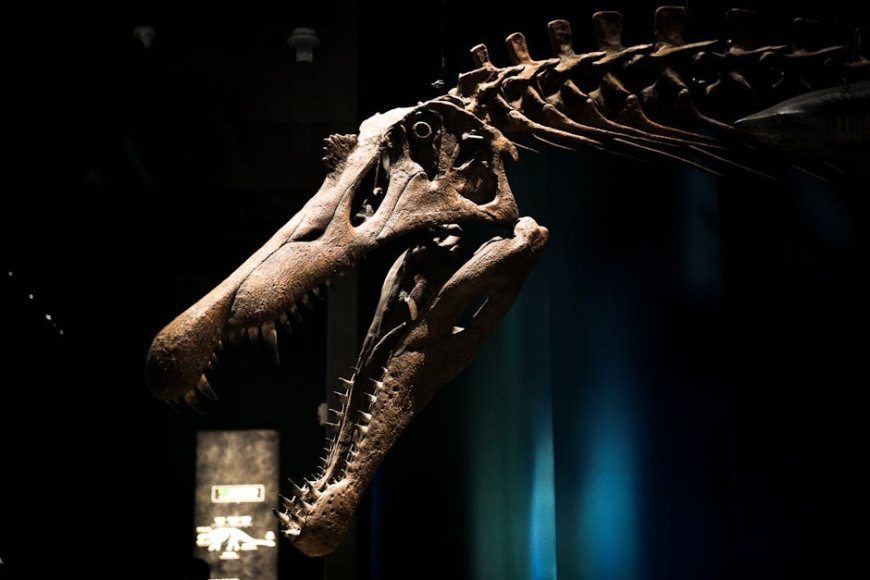
VOXBLICK.COM - Java Man Fossils Inspire Awe at Indonesia’s National Museum
For over a century, the discovery of Java Man has captivated scientists and laypeople alike.
Housed in Indonesia’s National Museum in Jakarta, these ancient fossils continue to spark wonder, offering extraordinary insights into the early chapters of human evolution. As visitors pass through the museum’s halls, they are transported back nearly a million years to when the first ancestors of modern humans roamed the lush landscapes of Southeast Asia. These fossils not only illuminate our evolutionary past but also reflect Indonesia’s vital role in global archaeology.
The story of Java Man begins in 1891, when Dutch paleoanthropologist Eugène Dubois unearthed a skullcap and thigh bone on the banks of the Solo River in East Java.
Classified as Homo erectus, Java Man represents one of the earliest known hominins outside Africa, providing a crucial link in the story of human migration and adaptation. The discovery was groundbreaking, challenging prevailing theories of human origins and forever embedding Indonesia in the annals of scientific discovery.

The Scientific Significance of Java Man
The Java Man fossils are more than remarkable relicsthey are pivotal in understanding the evolutionary journey of Homo erectus.
Estimated to be between 700,000 and 1,000,000 years old, these fossils reveal how early humans adapted to new environments, developed tool use, and migrated across continents. The discovery challenged Eurocentric views on human evolution and highlighted Southeast Asia as a significant cradle of human ancestry.
Modern research at the National Museum and in the field continues to build on Dubois’s work.
Advanced dating techniques and comparative analyses with other hominin fossils, such as those from Africa and China, provide a more nuanced picture of how Homo erectus lived, hunted, and interacted with their environment. The fossils also serve as an anchor point for studying Indonesia’s broader prehistoric past, shining light on the archipelago’s unique role in the migration and diversification of ancient species.
Indonesia’s Archaeological Heritage on Display
Indonesia’s National Museum is more than a repository for Java Man it is a center for scientific education and heritage preservation.
The museum curates an array of ancient artifacts, fossils, and interactive exhibits that trace the region’s archaeological and cultural evolution. Visitors can marvel at the actual Java Man bones and their casts, as well as reconstructions that bring these early ancestors to life.
- Interactive Displays: Digital reconstructions and immersive exhibits help visitors visualize ancient landscapes and lifestyles, making the science of human evolution accessible to all ages.
- Ongoing Research: The museum collaborates with international paleoanthropologists and local experts, ensuring that the latest discoveries and scientific perspectives are shared with the public.
- Conservation Initiatives: Special attention is given to the preservation of fossils and artifacts, using climate-controlled environments and advanced conservation methods.
Inspiring Awe and Scientific Curiosity
Standing before the Java Man fossils, visitors experience a profound connection to humanity’s distant past. The sense of awe is not just about the age of the bones but also about their storyone of migration, adaptation, and survival.
These relics remind us that Indonesia’s islands were once pivotal crossroads for early human journeys, blending the natural history of Asia and Australasia.
Beyond the scientific revelations, the Java Man exhibit inspires new generations of Indonesian scientists, archaeologists, and conservationists.
It highlights the importance of protecting Southeast Asia’s rich paleontological sites from threats such as urban development and illicit fossil trade. Through education and responsible stewardship, Indonesia’s National Museum ensures that the legacy of Java Man continues to enlighten and inspire, reaffirming the nation’s place at the heart of humanity’s shared heritage.
For those seeking a deeper appreciation of our evolutionary story, a visit to Indonesia’s National Museumand a moment with Java Manoffers a humbling and unforgettable experience.

What's Your Reaction?
 Like
0
Like
0
 Dislike
0
Dislike
0
 Love
0
Love
0
 Funny
0
Funny
0
 Angry
0
Angry
0
 Sad
0
Sad
0
 Wow
0
Wow
0